Ill Never Be Able to Eat Mushrooms Again Now They Been Connected With Trumps Penis
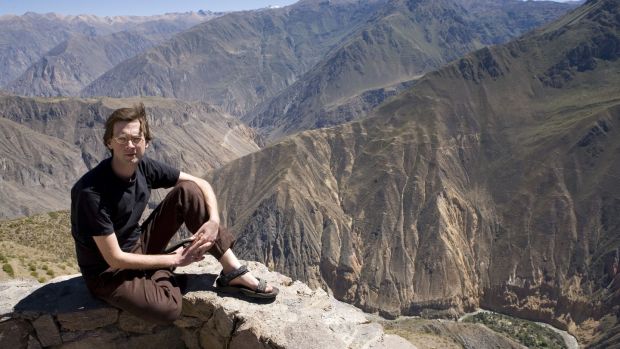
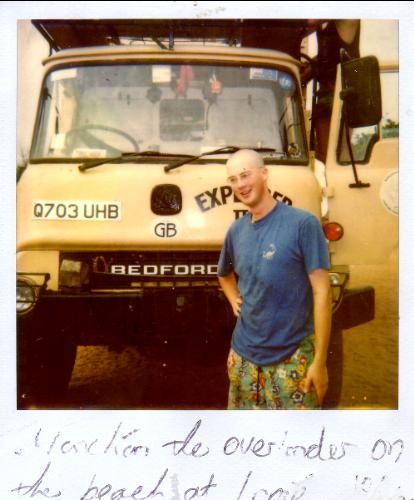
Manchán Magan has travelled across Africa in an ground forces truck, near been shot by the Columbian regular army, lived "in a hermitage in the Himalayas, drinking my own piss" and once found himself shouting "buail abhaile" to a black bear in British Columbia. (He doesn't know if it worked, because he got nervous and used pepper spray.)
I expected him to propose we meet past Coumshingaun lake in the Comeraghs or at a bothy in Dingle, just instead he suggests Kinnegad. And then we see at a cafe on the primary road through boondocks.
The reason for Kinnegad is businesslike: it is accessible to me and within hit distance of home for him, the x acres of land he had the foresight to buy in 1997 with £10,000 left to him by his grandmother.
"I rang all the auctioneers in the southeast and I said, 'I have £10,000. I desire to purchase 10 acres'. They laughed me out of it. I went to west Cork and east Clare where all the New Age communities were, but they were just a chip too intense for me. And then I rang an auctioneer in Castlepollard and he said, 'look no further' ", he laughs.
My life has been admittedly free, because I don't have a mortgage because I don't demand to earn anything.
The business firm he built on the land he bought in Westmeath was made of straw bales and it was the beginning of its kind in Republic of ireland. It cost him €6,000 and took half-dozen weeks to build. In 2002, when cracks started to appear in the walls, he replaced it with a similarly simple structure of physical plastered in mud, straw and cement, with a grass roof, this time at a cost of €26,000. He was just doing what he had seen people all over the globe exercise on his travels, he says – build elementary homes for themselves using whatever materials they had around them.
"In Tibet, it's stone; in Bolivia, information technology's reeds, in Africa it's mud, and no 1 gets a mortgage. That concept of tying yourself and your savings up to a mortgage doesn't exist," he says, over dark-green tea and cake.
"My life has been absolutely free, because I don't take a mortgage because I don't need to earn annihilation."
He still lives on very little; the fees for a single TV series tin come across him through for months and months. Given his well-documented wanderlust – although pre-pandemic he had already, in a column in this paper in Jan, sworn off travelling by plane unless absolutely necessary – I wonder how he has coped with lockdown. I needn't have worried. "Lockdown has been bright for me," he says. He bought another 10 acres and "finally I've been able to do all the things I wanted on my land. 4 years ago, I started growing vegetables, just nothing had been done to the scale or level I wanted it to be."
He has come up armed with some of the actual fruits of that labour – a bag of his succulent kale, green beans, cucumbers, and another big leafy veg I haven't been able to identify. "It's producing enough nutrient for a village and it'southward going to waste unless I give it to people."
Nosotros're not meeting to talk most self-sufficiency, but his new book, Thirty Two Words for Field: Lost Words of the Irish gaelic Landscape, a riproaring, archaeological and anthropological exploration of the lyricism, mystery and oddities of the Irish language, and the layers of ancient knowledge encoded inside. You won't have to speak Irish – you don't even accept to exist Irish – to be wholly captivated past this unique, enchanting book, which has been six years in the enquiry and writing.
We used to spend all our fourth dimension on breaks, sitting in the bushes, playing these very otherworldly games
He offers, for example, 21 different words for holes, 45 for stones. There are, he reveals, 70,000 Irish place names and more than than four,300 words to draw people's graphic symbol. And there are many ways to limited the changing qualities of the sea, lite or the current of air.
His love of the language came from summers spent on the Blaskets and from his grandmother, Sighle Humphreys, who would pay him and his siblings money for every saying they learned. The niece of The O'Rahilly and a "bellicose" republican, "she was just desperate to connect us to the Irish gaelic linguistic communication in any way she could, whether it was the political side, the local side or the story side", he says.
Irish gaelic was introduced to him "equally a weapon of war", but what he would grow to love near information technology were the clues it offered to who nosotros are as people; answers to the existential questions he has been asking himself since childhood.
He was a thoughtful child, who fitted in everywhere and nowhere. His life was carve up between Donnybrook, where his family abode was, and the w Kerry Gaeltacht where he spent chunks of each twelvemonth. When in Dublin, he went to Mountain Anville primary, where his best friends were former Barack Obama adviser Samantha Ability and chief executive of the Irish Youth Foundation Lucy Masterson.
"We used to spend all our time on breaks, sitting in the bushes, playing these very otherworldly games. But then I joined Gonzaga" and though information technology was progressive, there were no girls, and totally different types of games beingness played. "I but couldn't understand competing."
Even as a boy, he was a pacifist, more interested in growing herbs than playing rugby. The political luggage surrounding Irish held no appeal for him. Its magic only came alive when he began to see it as the key to decoding who we are. "We talk about everything about the language, except what is vital nigh it: that it has preserved this aboriginal knowledge about beingness in the world, and our connection with the landscape," he says.
Now, more than than ever, he says, "we are on this drastic search for our psyche; [to know] who the hell am I in this world? It just happens to all be contained within the linguistic communication. It'south actually trippy."
And it is really trippy – whether he'southward talking about how Irish can provide a rich vocabulary to describe lust in animals, throw up insights into what our ancient forebears might accept instinctively understood about physics, or allow united states to express emotions nosotros don't fifty-fifty recognise in English language, such as "iarmhaireacht, the loneliness you feel at cockcrow, when you are the simply person awake and experience that existential pang of disconnection, of not belonging".
The volume was born partly of his frustration with the fact that we go along having the wrong conversations about Irish.
"It was the paucity of arguments well-nigh the Irish language that did my head in. We say the same things: it was taught badly in school; it was browbeaten into me; what'south the apply of the Irish gaelic language? I realised there's a million other things to be said nearly the language, particularly if y'all expect at it through the prism of aboriginal languages."
In the book, every bit well as capacity positing whether the tales of Cú Chulainn might accept been inspired by magic mushrooms and a comet, he explores the links betwixt Standard arabic and Irish (which includes the give-and-take for shamrock – seamróg, from seamair/clover, which came from pre-Islamic Pagan Arabic, "shamrakh", which ways "3 gods in i leaf"). He also dives into the fascinating connections between Irish and Sanskrit, and the parallels between systems of law, social hierarchy, divine worship and mythology in Irish and Hindu culture.
Of the Irish gaelic spoken on the Blaskets, he writes: "It was a form of the linguistic communication that retained traces of its roots in the Indus Valley in key Asia; you could hear echoes in their dialect of words and phrases that had veered off from Sanskrit, Western farsi and Hebrew millennia before."
One of the most visible things we have lost is something that must have struck many of us racking up miles on country roads this summer: our original place names, which told u.s. and then much about the history, topography and folklore of the land, and take been brutally anglicised, "rendered into garbled and discordant forms".
Sexual practice in Irish was dealt with in a less prudish and more honourable way than other cultures
Our identify names aren't all we lost. Our folk cognition of traditional herbs and remedies vanished too over the years – peradventure, he suggests, because these were known amongst women, and scholars tended not to inquire women. This may besides explain why Irish gaelic has over 50 words for penis (he cites everything from bliúcán (wild carrot), to feirc (hilt of a dagger),) and 21 different words for sexual intercourse, though is much more limited when it comes to describing women's experience of sexuality or their bodies. He can notice but almost ten words for vagina or vulva (pís, gabhal mná and bléin mná, the latter two, he notes, the latter two significant "women'south groin" and "women'south crotch". )
Only that doesn't mean a much richer variety of language to depict the female body or experience of sexuality doesn't exist, only that it has not yet been recorded.
"Finding a sensitive, female-centric view of sexuality in older Irish texts is just non possible," he writes, going on to theorise that women may have been reticient to share, or perhaps just weren't asked by scholars. What we have managed to divine from the very few existing texts is that "sex in Irish was dealt with in a less prudish and more honourable way than other cultures. For example, menstrual blood was bláthscaoileadh (bloom release) or bláthdhortadh (bloom shedding). An t-ádh dearg (the red luck) was also used, as was tá brúdáin orm (I'chiliad being crushed)" – phrases that strike me as far more useful and body positive than the coy, American "Aunty Flo is visiting" many of the states grew upwards with.
Does he feel a sense of loss at the vanishing of and then much of the linguistic communication? No, he says immediately. "I merely happen to exist of a very sunny disposition. I run across the world progressing, becoming more positive and becoming more enlightened every unmarried day over centuries."
In terms of the language, "nosotros know all nigh the oppression. We know there are and so many more words for enslavement in the Irish gaelic language" than in other languages, but you won't find a chapter on that in the book. He wanted to write something other than the story of the 800 years. Something more than hopeful.
In its closing pages, he writes: "I am non despairing about the gradual fading of the richness of the language, because Irish gaelic is equally much a story every bit a linguistic communication, and most stories never really die. Even if they are not retold every solar day, they linger in the depths of our mind. Every speaker is a narrator of this epic tale, and every word carries within it a slice of the plot."
- 30-Two Words for Field: Lost Words of the Irish Mural is published by Gill.
Source: https://www.irishtimes.com/culture/books/thirty-two-words-for-field-50-for-penis-what-the-irish-language-tells-us-about-who-we-are-1.4334904
0 Response to "Ill Never Be Able to Eat Mushrooms Again Now They Been Connected With Trumps Penis"
Post a Comment